
MYC Program from Canada
Music for Young Children® (MYC) has been teaching children from the ages of 2-10 the foundation of music education and piano playing, in a group situation, for 41 years. Today there are over 800 locations on 3 continents, confirming that it is an international leading quality program for early childhood music education.
Designed and written by an early-childhood specialist with specific qualifications not only in music education, but learning styles and learning disabilities, our method speaks directly to our students with age-appropriate activities to help develop not only their ability to play and read music, but also cognitive, physical and social skills.
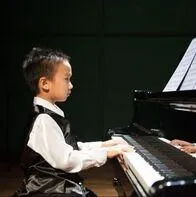
However, regardless of whether your child continues in music study after MYC®, our method provides your child with such a wide knowledge of musicianship and appreciation, that they will carry the love (and knowledge) of music with them throughout their lives.
MYC is the only early-childhood music education method that integrates and utilizes Conservatory repertoire within our own method, working towards each MYC graduate completing their first piano exam and theory exam.
Each concept that is taught (in MYC), is introduced and supported through the four learning styles (auditory, tactile, analytical and visual) to ensure that every child in MYC has the highest level of success in not only learning each concept, but also being able to apply and manipulate that information as needed.
Sunshine Program
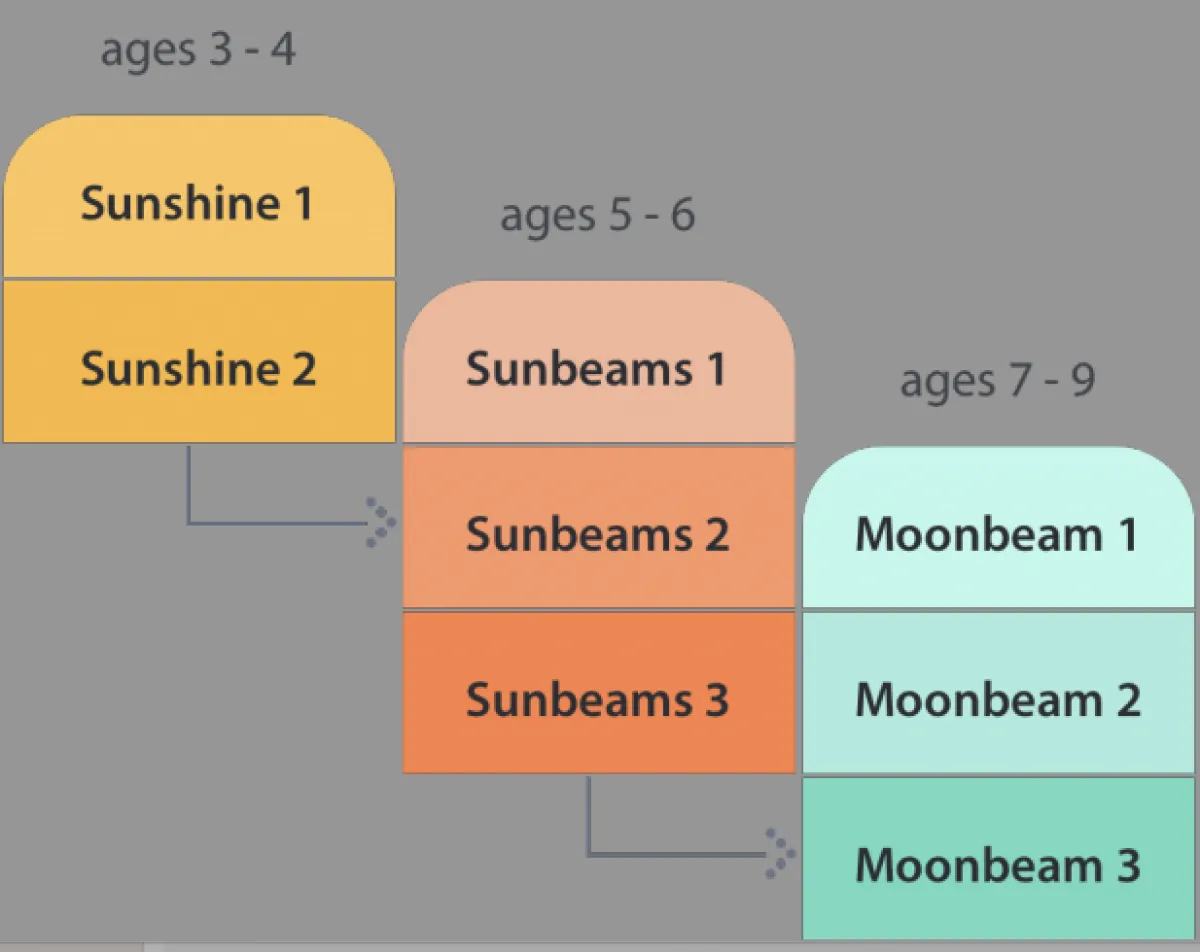
Sunshine 1 , the youngest of the keyboard programs, is the starting point of the MYC® Method, building their foundation in music reading and playing the piano. Students experience movement through beats and rhythms, as well as developing their fine motor skills with rhythm instrument ensemble playing. Children start learning the geography of the piano and note-reading through our MYC Critters (and their stories that children can relate to). By the end of the SS1 level (after 36 weeks), children are able to play their first scale (C Major) and are reading from the staff. Their pre-reading experiences such as identifying like/different sorting, patterns, and reinforcing and recalling the music concepts through fun at-home activities with gluing and colouring are all part of this level.
Sunshine 1 (3-4 years old)- 9 lessons/ term. Total 36 lessons
Learning piano and rhythm through MYC’s unique keyboard and rhythm ‘critters’
off-the-staff reading for contour and patterns
steady beat experiences
on-the-staff reading in treble clef and bass clef
listening to identify and use dynamics (loud and quiet sounds)
listening to a rhythm pattern and writing it using rhythm writing tools. This is sometimes referred to as rhythm dictation.
Sunshine 2 - 9 lessons/ term. Total 36 lessons
Review and continuing development of: keyboard geography and rhythm through MYC’s unique keyboard “critters”, Identification and use of dynamics (loud and quite sounds) and listening to a rhythm pattern and writing it
Expanded note reading in treble clef and bass clef
Coordination of LH and RH playing
Scale playing with harmonizing bridge chords in C Major, a minor and G Major
Identification of melodic patterns
Introduction to staccato (detached) and legato (smooth) touches
Information in child size bites about famous composers
Sunbeams Program
Sunbeams 1 (SB1) is the entry point of the MYC® Method for 5-6 year old beginners. They are first introduced to piano geography and rhythms through our MYC Critters to help set their foundation of music knowledge and education; however, the pace of learning for these Sunbeams matches their developmental stages. Vocabulary development is the focus for this age group- at this stage we introduce “big kid” terminology to introduce concepts, finger numbers, and keyboard geography.
Sunbeams 1
Identification and development of keys and rhythm through MYC’s unique keyboard ‘critters’
off-the-staff reading for contour and patterns
steady beat experiences
on-the-staff (pitch) reading in treble clef and bass clef
Grand staff reading (treble and bass clef)
listening to identify and use dynamics (loud and quiet sounds)
listening to a rhythm pattern and writing it using rhythm writing tools.
coordination of LH and RH
scale playing with harmonizing bridge chords in C major, a minor and G major.
Sunbeams 2
Study of seven different keys with key signatures.
Two note bridge chords grow to three note full chords.
Coordination of left hand and right hand in playing broken chords with a melody.
Coordination in hand-over-hand (crossing over) pieces.
Grand staff reading expands to include notes from low G in bass clef to high G in treble clef.
Staccato (detached) and legato (smooth) touches are explored.
Harmonization (adding chords to a melody) and transposition (moving from one key to another) are important study elements this year.
Continued listening to identify and use dynamics (loud and quiet sounds), rhythm patterns and accompaniment styles.
Sunbeams 3
Study of minimum of eight keys
Continued study of scales harmonized with primary chords and practice of accompaniment patterns including broken chords and playing rhythmic patterns
Study of three forms of the minor scale: natural, harmonic, and melodic.
Study of inversions of triads
Study of cadences. (A cadence is a progression of chords.)
Expanded studies of: note names to include ledger lines and articulation with an introduction to accents.
Introduction to simple analysis.
Continued practice of: harmonization and transposition, composition and arranging, listening for dynamics, meter, articulation, form, and accompaniment styles.
Moonbeams Program
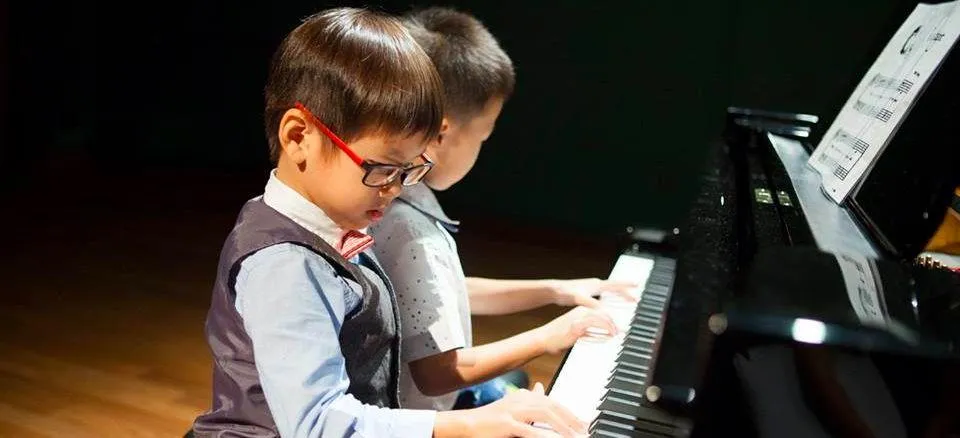
Moonbeams 1 (MB1) is the entry point of the MYC® Method for 7-9 year olds. The older beginner program is designed to support the students’ growing sense of independence. Reading becomes the primary focus for gathering information, while the songs, ensembles and keyboard repertoire incorporate early piano literature, folk songs, technique and harmonization.
Moonbeams 1
pattern reading
scale playing with harmonizing chords in 6 keys
keyboard repertoire with plentiful supplementary pieces for holidays and extra challenges
rhythm and keyboard ensemble experiences
harmonization and composition experiences
transposing within 5 finger patterns
understanding and utilizing legato and staccato touches
Moonbeams 2
Study of minimum of eight keys with continued study of scales harmonized with primary chords.
Practice of accompaniment patterns including broken chords and playing rhythmic patterns.
Study of three forms of the minor scale: natural, harmonic, and melodic.
Study of inversions of triads
Study of cadences. (A cadence is a progression of chords.)
Study of 6/8 time signature.
Expanded study of: note names to include ledger lines and articulation with an introduction to accents.
Introduction to simple analysis.
Continued practice in: harmonization and transposition, composition and arranging.
Continued listening for dynamics, meter, articulation, form, and accompaniment styles.
Moonbeams 3
Moonbeams 3 is the final level in Music for Young Children®. When MYC was written, it was with the intent to integrate and prepare our students to take their first piano exam and theory exam at the end of their MB3 year. It is an exciting year for students, parents and teachers as these children have now gained so much knowledge, understanding and appreciation of music and piano playing that they are able to manipulate, pull-from and engage all the learning they have received throughout their journey in their MYC classes, whether it is through theory, composition, and/or the musically shown (and heard) through their playing.
What people say about MYC program?

Our Location
150, Orchard Road,
Orchard Plaza, #08-12
Singapore 238841
© 2012-2026 Music Zoo Studio (Business Registration : 53203748X) All rights reserved